Learning Spanish can be a challenging but rewarding experience, especially when it comes to understanding the nuances of prepositions. Two of the most commonly confused prepositions in Spanish are por and para, which can be tricky to use correctly even for native speakers. The main difference between por and para lies in their meanings and usage, with por generally indicating the cause or reason for something, and para indicating the purpose or destination of an action.
Despite their differences, por and para are often used in similar contexts, which can lead to confusion for language learners. For example, por can be used to indicate the duration of an action, while para can be used to indicate the deadline or target date for a task. Understanding the correct usage of por and para is essential to communicate effectively in Spanish, and practicing with a printable worksheet can be a great way to reinforce your learning.
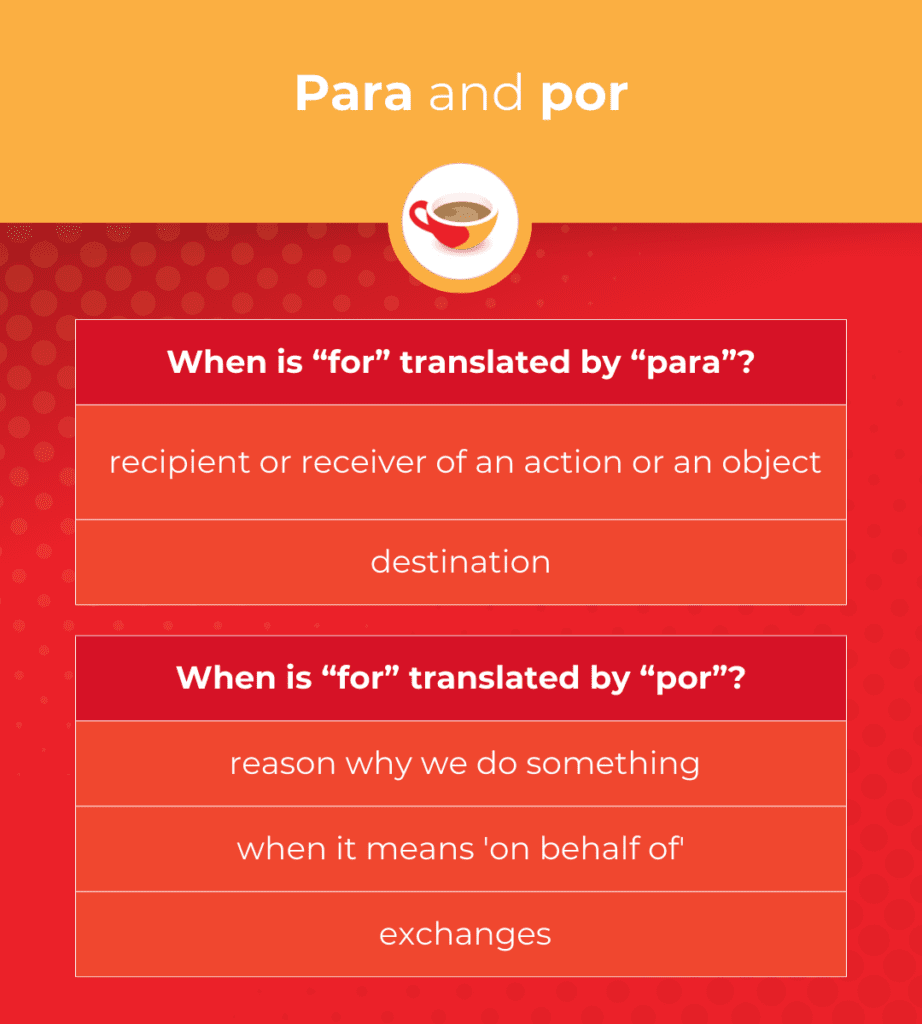
Por Vs Para In Spanish How To Translate For
Understanding the Basics of Por and Para
To grasp the basics of por and para, it’s essential to understand their individual meanings and usage. Por is often used to indicate the cause or reason for something, such as ‘Me duele la cabeza por el ruido’ (My head hurts because of the noise). On the other hand, para is used to indicate the purpose or destination of an action, such as ‘Voy al aeropuerto para recoger a mi amigo’ (I’m going to the airport to pick up my friend). By understanding these basic concepts, you can start to build a strong foundation in using por and para correctly.
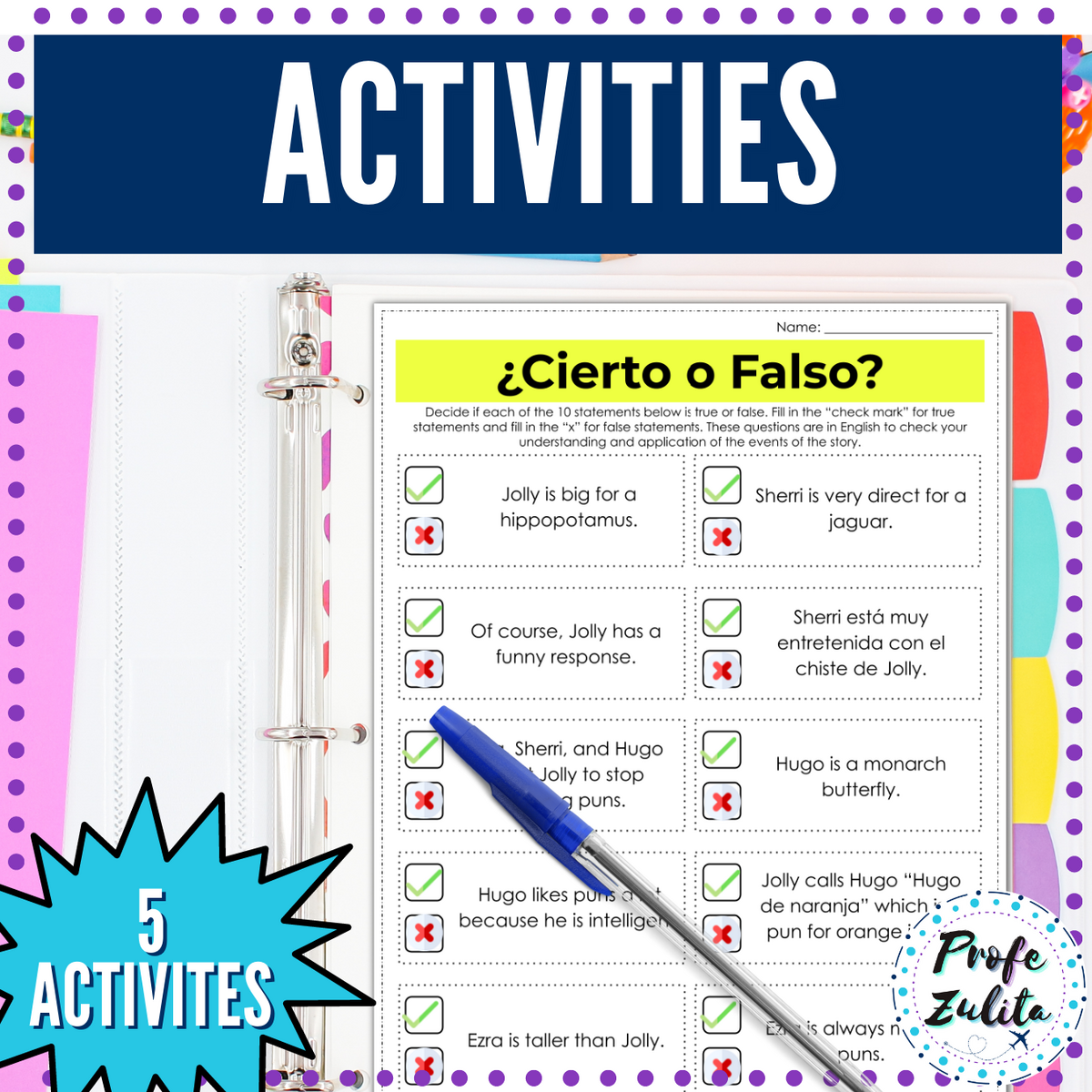
Spanish Por Vs Para 2 Grammar In Context Story 5 Activities Sub Plans Made By Teachers
Using Por Vs Para in Sentences
Using por and para in sentences can be a great way to practice your Spanish skills and reinforce your understanding of these prepositions. For example, you can try creating sentences that use por to indicate the cause of an action, such as ‘Estoy cansado por el trabajo’ (I’m tired because of work). Alternatively, you can use para to indicate the purpose of an action, such as ‘Voy al gimnasio para hacer ejercicio’ (I’m going to the gym to exercise). By practicing with different sentences, you can become more confident in your ability to use por and para correctly.
Practicing with a Por Vs Para Printable Worksheet
Practicing with a Por Vs Para printable worksheet can be a fun and effective way to improve your Spanish skills. These worksheets typically include a variety of exercises, such as fill-in-the-blank sentences, multiple-choice questions, and short writing prompts, all designed to help you practice using por and para in context. By working through these exercises, you can reinforce your understanding of these prepositions and develop a stronger grasp of Spanish grammar and syntax. Additionally, printable worksheets can be a great resource for teachers and students alike, providing a convenient and engaging way to practice Spanish outside of the classroom.
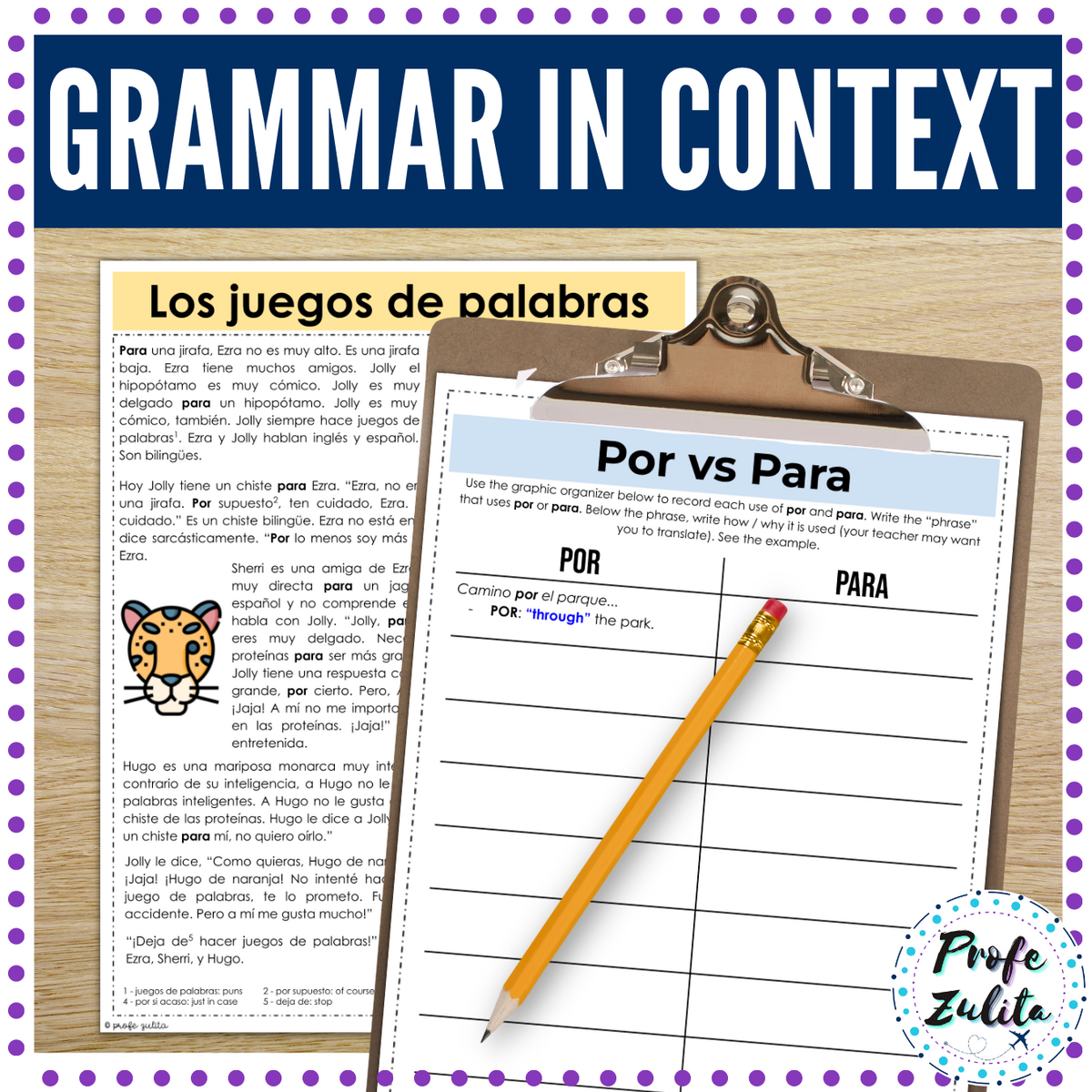
Spanish Por Vs Para 2 Grammar In Context Story 5 Activities Sub Plans Made By Teachers
In conclusion, mastering the difference between por and para is a crucial step in becoming proficient in Spanish. By understanding the basics of these prepositions, practicing with sentences, and using a Por Vs Para printable worksheet, you can improve your Spanish skills and become a more confident communicator. Whether you’re a beginner or an advanced learner, taking the time to practice and reinforce your understanding of por and para can make a significant difference in your ability to express yourself effectively in Spanish.
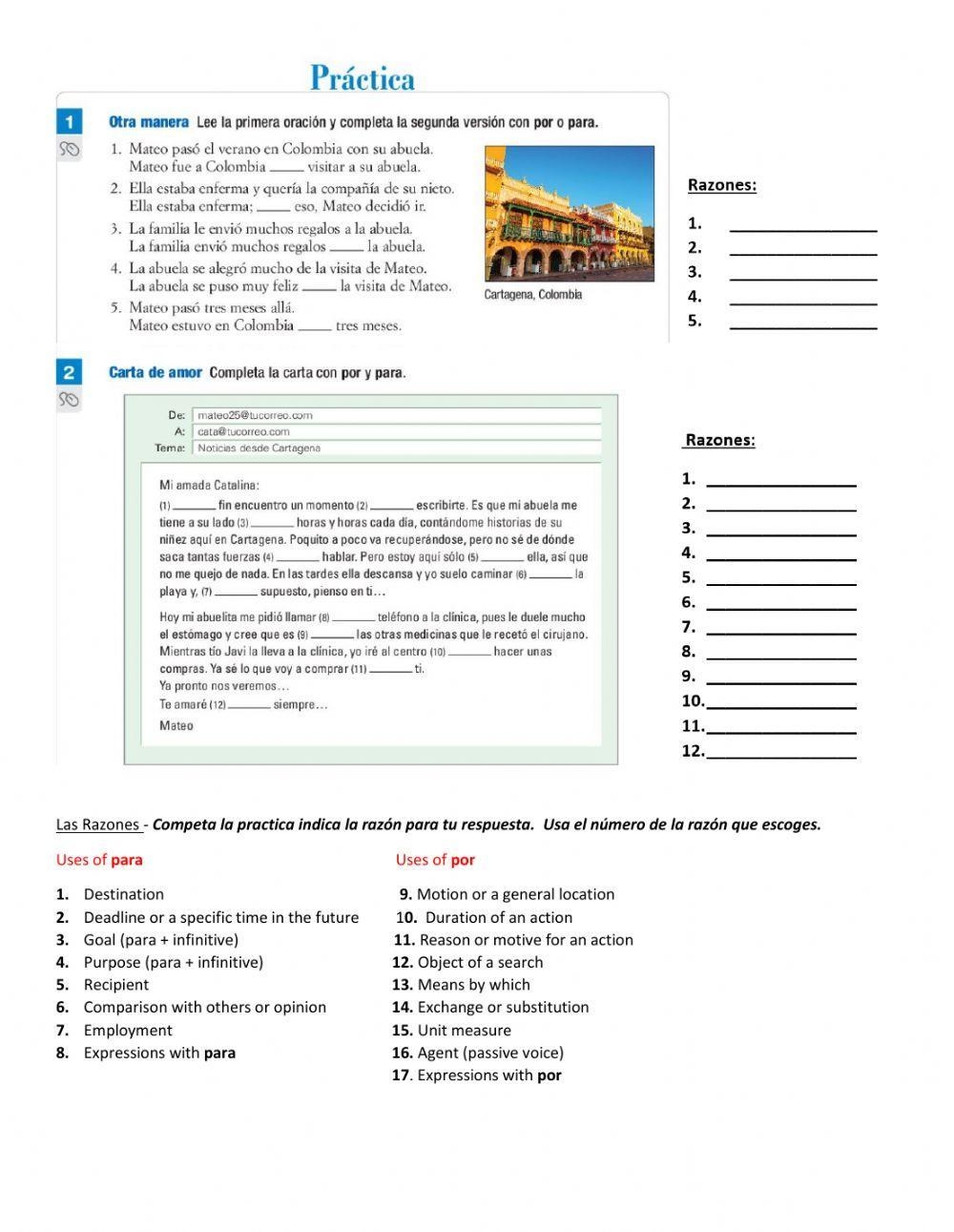
POR Vs PARA Printable Notes And 70 Practice Examples By Barbara Worksheets Library
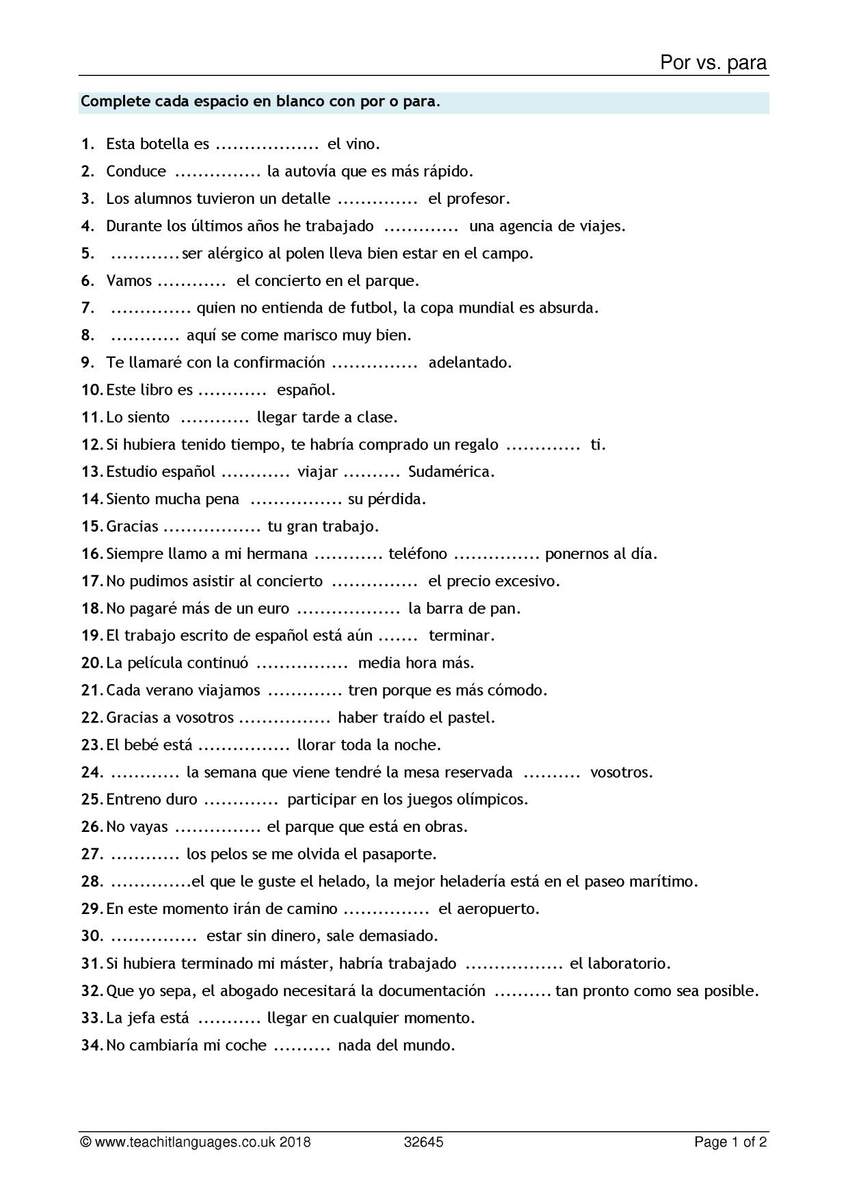
Grammar Worksheet Por Vs Para KS5 Spanish Teaching Resource Teachit